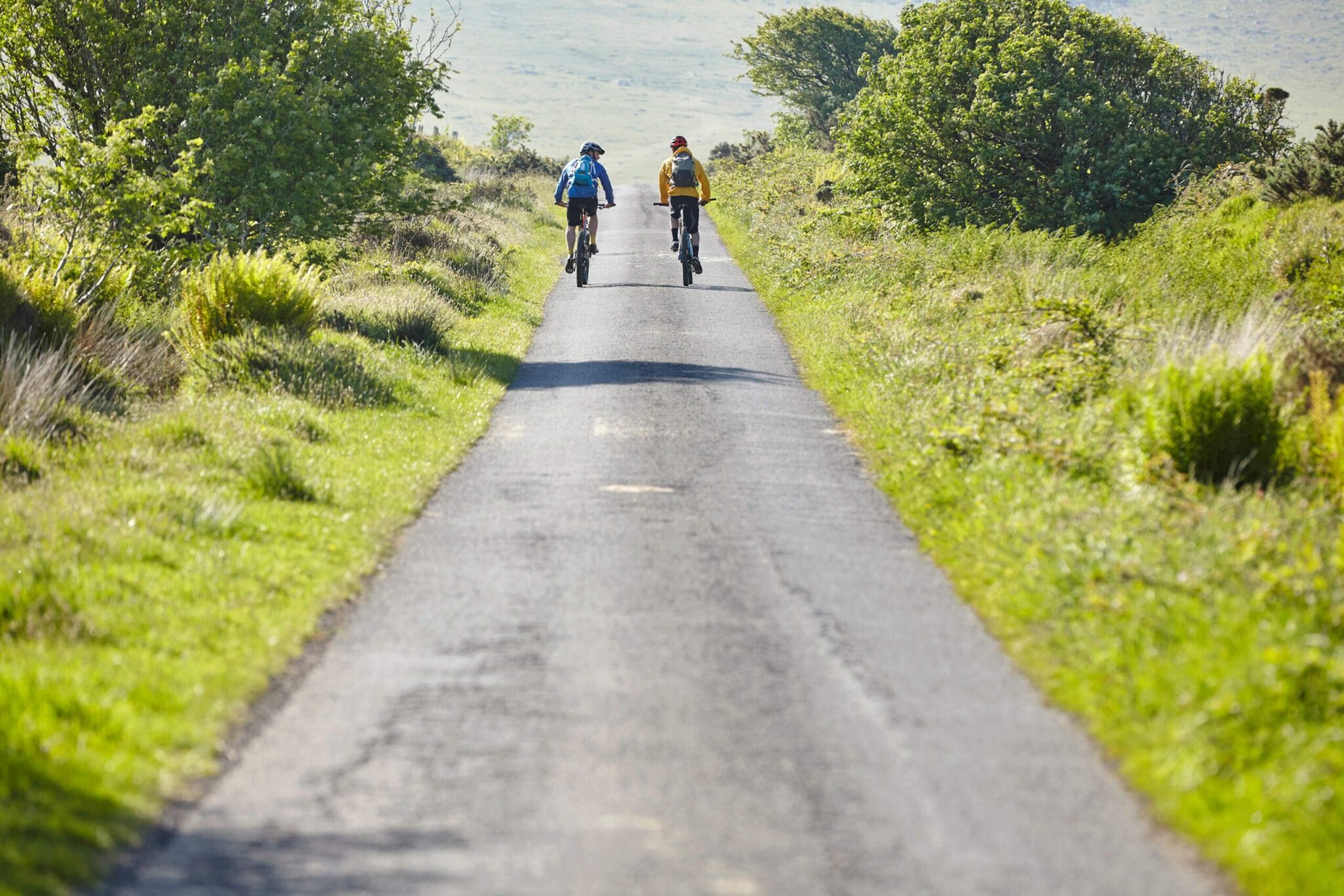
The Monaghan Way runs straight through drumlin country, the low, rounded hills that shape this part of Ireland. A long-distance, one-way trail, it starts at Annadrumman on the southern shore of Lough Muckno, just outside Castleblayney, and reaches the Patrick Kavanagh Centre in the village of Inniskeen. It carries the status of a National Waymarked Way and remains the only trail in County Monaghan currently registered on the national Walks Scheme.
Much of the route crosses private farmland, opened up through the generous consent of local landowners. It dips in and out of the area’s drumlins and threads through a mix of pastoral land and natural habitat. Some stretches hug the bank of the river Fane, while others trace the line of the former Great Northern Railway.
The route in detail
Graded as moderate, the trail mixes some climbs with rough, uneven surfaces, and obstacles such as protruding roots and rocks turn up here and there. It suits anyone with a moderate level of fitness and some walking experience. The full route covers 18.5 km between Inniskeen and Lough Muckno, with a total height gain of 212 metres and an estimated completion time of two days. Underfoot, the terrain shifts between farm tracks, disused railway, fields, and quiet roads through gently undulating countryside, broken by a few short, steeper sections.
Despite the rolling profile, there are no long or steep climbs, and the highest point reaches just 136 metres. The walk splits neatly into one long day or two shorter ones, and three associated loop walks open up shorter samples of the route: the Inniskeen and Magoney loops and the Toome loop.
A landscape written in names
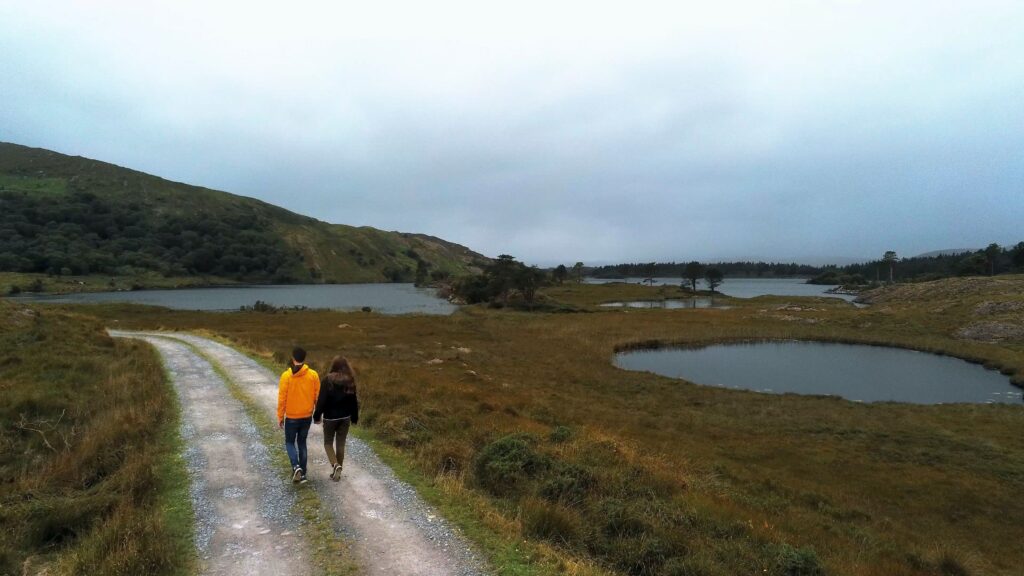
Several townland names along the route carry their own history. Lough Muckno is the English form of the Irish Mucnú, built from the words muc snámh, ‘swimming pig’. The name comes from a story about St Maeldoid, who planned to build a church on an island in the lake. Each night a black boar rose from the water, knocked the stones down and carried them off. Reading this as divine intervention, the saint followed the pig to the northern shore and raised the church where it finally dropped the stones, on the site now known as Mullandoy, or Church Hill.
Other names speak to the land’s working history. Killyboley, from Coillidh Bhuaile, means ‘wood of the booley’ – a booley being a summer milking place, where cattle were moved to graze the uplands and young people lived in rough shelters to milk and guard them, and to socialise.
Tattyboy holds the old tathe, a unit of land equal to 60 Irish acres once used across Fermanagh and Monaghan. The route ends fittingly at Inniskeen, from Inis Caoin Deagh, ‘the lovely island of St Daigh’, named for St Daigh Mac Cairill, a metalworking monk who founded a monastery on the site in the sixth century.
Practical notes
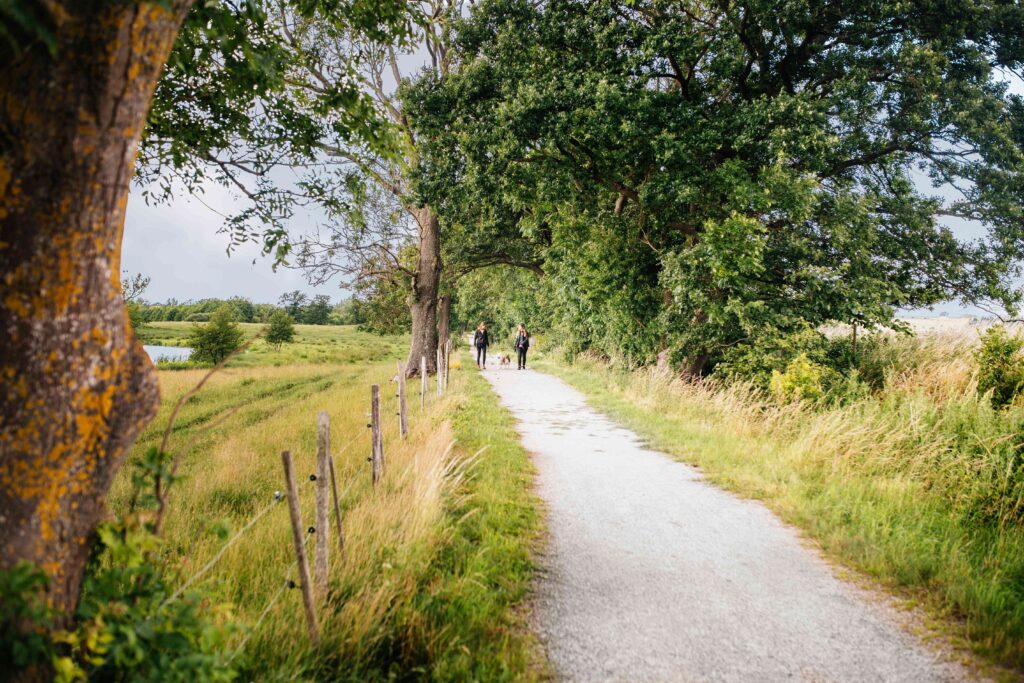
The terrain requires sturdy outdoor footwear and weather-appropriate clothing. Occasional steep slopes and uneven, rough ground are easier at a careful pace, and the moderate grading reflects that. Dogs are not permitted anywhere on the Monaghan Way, since the route crosses private farmland where the wishes of landowners come first.
Livestock may be present along the way, especially through spring and summer, and animals can pose a danger, so caution nearby is warranted. In an emergency, the numbers to call are 999 or 112, with a request for the Ambulance Service, Gardaí, or the Fire Services in the event of fire. Monaghan County Council manages the trail and can be reached on 047 30500 or at [email protected].
Responsible use of the route follows the seven Leave No Trace principles: planning ahead and preparing; consideration for others; respect for farm animals and wildlife; responsible travel and camping; leaving what is found in place; proper disposal of waste; and protecting nature from fire.
The Monaghan Way closes each year from midnight on 24 December to midnight on 25 December. Across quiet country roads, cross-country sections, riverside walkways, and lakeshore approaches, it runs through some of County Monaghan’s richest heritage.